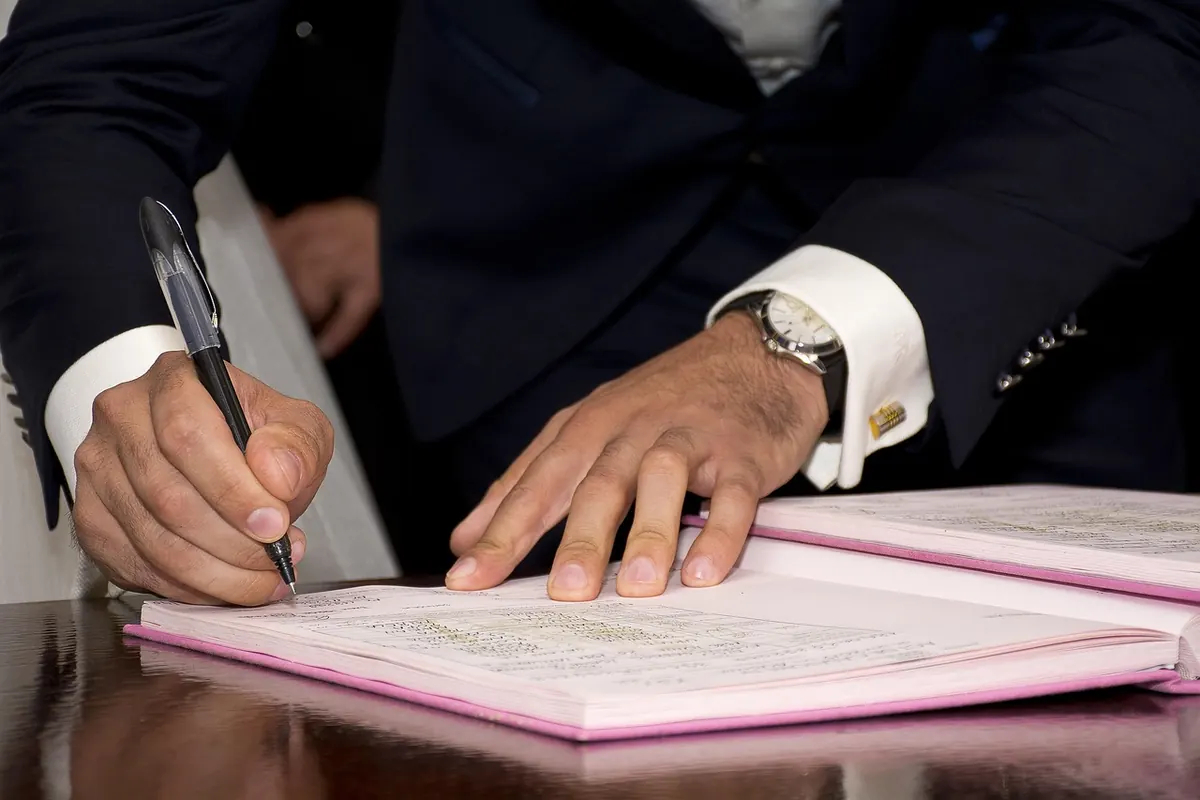
Signing your name should take two seconds. It should not involve shaking the pen, retracing a letter, or finding a smear on the paperwork ten minutes later. Rollerballs are the natural choice for signatures because their water-based ink flows freely and lays down a dark, confident line — but the category is broad, and a pen that feels lovely on a shopping list can behave quite differently when you slow down and draw a proper signature. Three things decide whether a rollerball is right for signing: how it sits in your hand, how reliably the ink flows, and how quickly it sets on the paper you actually use.
Start with the ink, not the barrel
A rollerball pushes water-based liquid ink through a small ball bearing. That ink is much thinner than ballpoint paste, so it needs almost no pressure, which is why the pen glides and why the line looks darker and more deliberate than a ballpoint's.
The word covers more than one thing in UK shops, though. Traditional liquid-ink rollerballs give the wettest, most expressive line and feather easily on thin or recycled paper. Gel pens suspend pigment in a gel, so the line is more opaque and usually holds its edges better, though many are slower to set on smooth, coated paper. Low-viscosity ballpoints sit between the two and tend to be the safest option on cheap copier paper.
For signing, the question narrows to one thing: does the ink stay even when you deliberately slow down? Quick, casual lines hide every flaw a pen has.
Grip and balance: what your hand does at the end
Most rollerballs have a barrel between roughly 8mm and 11mm across. Below that, people with larger hands tend to grip harder than they should; above it, the pen can feel like a marker. Neither is wrong, but signing is a slow, controlled movement, and a cramped grip shows up as a wobble in the loops.
The section — the part your fingers actually touch — matters more than the barrel finish. Rubberised grips are comfortable and forgiving, but some soften or perish over years of use. Metal sections look sharp and can become slippery if your hands are warm. Moulded triangular grips quietly teach your fingers where to sit, which suits anyone who holds a pen high or tightly.
Weight is a personal thing, but there is a pattern worth knowing. Lighter pens encourage fast, loose signatures; heavier pens slow you down and steady the stroke. If you sign dozens of documents in a sitting, aim for something in the middle. Cap posting changes everything, too — clipping the cap on the back shifts the balance rearwards and, for many people, makes a slow signature noticeably more stable.
Ink flow: what "smooth" actually tests
Smoothness is not the same as wetness. A pen can feel silky and still skip on a fast upward stroke, or flow generously and blob at the end of a slow curve. Two tests reveal most of it.
First, the cold start. Take the cap off, leave the pen on the desk for a minute, then write your signature without a scribble first. A good signing pen starts immediately. Pens that need warming up will let you down at exactly the wrong moment. Retractable, capless rollerballs use a spring-loaded seal to prevent this, and many cope well with being left uncapped briefly.
Second, the consistency test. Sign your name three times at three speeds — quick, normal, deliberate — on the same sheet. Look for a line that stays the same width throughout. Refill quality varies enormously between brands, and a tired refill that has sat in a drawer will behave worse than a fresh one in the same pen.
Drying time and the smudge problem
Water-based ink sets by soaking into the paper and evaporating. Absorbent paper, such as a standard letterhead or a plain envelope, takes it quickly. Coated or glossy stock — certificates, presentation folders, some headed paper — pushes the ink to the surface, where it sits wet for longer.
Test on the paper you will actually sign. A pen that dries in a couple of seconds on copy paper may need far longer on a coated certificate.
Left-handed writers have the harder job, because the hand travels over the wet line. Quick-drying gel refills and finer tips help, as does the old trick of keeping a sheet of blotting paper or plain absorbent paper under the heel of the hand and sliding it along as you write. It sounds fussy until you have ruined a signed document.
If a document specifies a particular type of ink, check with the organisation asking for it rather than assuming any pen will do.
The UK buying checklist
- Test with your own signature, not a scribbled line. Loops and flourishes expose skipping that a quick squiggle hides.
- Use similar paper. Ask for a sheet like the documents you sign, or bring one.
- Check the cold start. Uncapped for a minute, then write. No shaking, no retracing.
- Try your normal grip for at least thirty seconds. If your fingers slide, the section is wrong for you.
- Post the cap. See whether the balance improves or ruins the feel.
- Note the refill code. Rollerball refills are largely brand-specific, and a pen with no available refill becomes landfill.
- Consider the clip. A stiff metal clip survives a jacket pocket; a soft plastic one may not.
- Buy one first. Use it for a week of real signing before committing to a set.
Refills, storage and the long game
Rollerball refills dry out, and they do it faster when the pen is left tip-up for months. Store signing pens horizontally or tip-down, and keep spares sealed until you need them. Resist the urge to buy years of refills in one go; a refill that has sat in a drawer for three years is not the refill you tested.
If a pen refuses to start after a long rest, wipe the tip gently on scrap paper rather than pressing hard, and give it a few short strokes. Pressing harder rarely helps and can damage the ball seating.
A five-minute test before you commit
Find a quiet counter, take two pens you are considering, and run the same sequence on each. Uncap both and leave them for a minute. Sign your name slowly on absorbent paper, then on something smoother. Wait ten seconds and run your thumb across the first signature. Then sign again, quickly, and check the line for gaps.
The pen that passes all four steps is the one to buy. Everything else — colour, finish, brand reputation — is decoration. A rollerball earns its place in your bag by starting first time, holding an even line at any speed, and setting before you turn the page.
Photo: epicioci / Pixabay