Most first fountain pens are either quietly perfect or quietly disappointing, and the difference is rarely the pen's fault. It comes down to three things: the nib width, the way the pen takes ink, and the paper underneath it. Get those roughly right and the experience clicks immediately — less pressure, cleaner lines, and a decent reason to slow down. Here is what to decide before you spend anything.
Nib sizes: what the letters actually mean
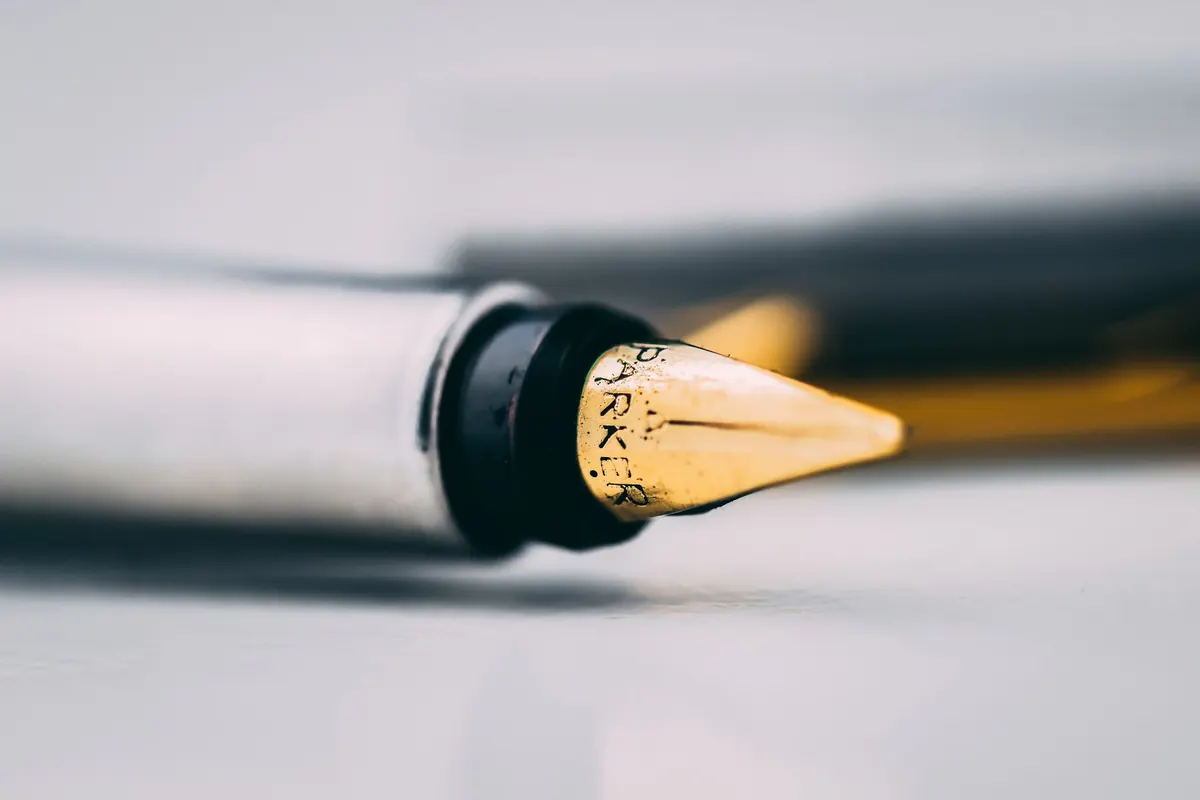
Nib widths are labelled in a loose, old-fashioned way. You will see extra fine (EF), fine (F), medium (M), broad (B), and sometimes double broad (BB). The actual line each one lays down is measured in fractions of a millimetre, but the labels are not standardised between manufacturers, and that catches beginners out constantly.
The most useful rule of thumb: Japanese nibs (Pilot, Platinum, Sailor) run roughly one size finer than German and other European nibs. A Japanese medium often writes like a European fine. If you are ordering online and unsure, read the retailer's stated line width rather than trusting the letter on the nib.
Beyond the round nibs
Most beginner pens come with a plain round nib, which writes the same in every direction. Once you are comfortable, two variations are worth knowing:
- Stub or italic nibs are cut flat across the tip, so downstrokes are wide and sidestrokes are narrow. They add character to headings, cards and letters, but they demand a steadier hand and are fussy about paper.
- Flexible nibs bend under pressure to vary the line. Genuine flex is mostly found on vintage pens or specialist modern models, and it is a poor first choice — it punishes a heavy hand.
Matching the nib to your handwriting
Look at your own writing before you look at the pen. Small, tight handwriting suits a fine or extra fine nib, because a broad nib will fill in the loops and turn words into a smear. Large, looping handwriting looks cramped with an extra fine and comes alive with a medium or broad.
Left-handed writers should lean towards a fine nib and a fast-drying ink, especially if you write with your hand hooked over the line. A very wet broad nib plus slow-drying ink is a recipe for a smudged palm and a ruined page. Some manufacturers offer nibs ground specifically for left-handed writers, and they are worth the small premium.
Think about the job too. If you are taking lecture notes on whatever paper is to hand, a fine nib is your friend. If you are journaling on good paper at a desk, a medium or stub gives you more pleasure per sentence.
Steel, gold and what you are paying for
A steel nib is stiff, inexpensive, and perfectly capable of lovely writing — most beginners should start there and stay there for a while. Gold nibs, usually 14k or 18k, feel softer and more responsive, and cost several times as much. They are a pleasure, not a requirement.
What actually wears against the paper is the hard tipping material welded to the end of the nib, not the steel or gold behind it, so a well-made steel nib will last for years of normal use. If you want to experiment cheaply, look for pens that sell replacement nib units separately. Swapping a nib is often a thirty-second job and it is the least expensive way to find out what you actually like.
Filling systems: cartridges, converters and pistons
How the ink gets into the pen matters more than beginners expect.
- Cartridges are sealed plastic tubes of ink you push into the back of the nib section. They are clean, convenient and ideal for a bag or a desk drawer. The catch: each brand tends to use its own shape, and standard international cartridges will not fit many Japanese or Lamy pens.
- Converters are refillable tubes shaped like a cartridge, with a twist or push mechanism to draw ink from a bottle. They usually cost a little extra and let you use any bottled ink you like.
- Piston and vacuum fillers hold ink inside the barrel itself. Capacity is generous, but cleaning takes longer and you cannot top up from a cartridge.
- Eyedropper pens are filled with a syringe and seal the ink in the barrel. Fine for some models, messy for most.
A sensible arrangement for a first pen: a pack of cartridges for convenience and a converter for bottled ink. Use fountain pen ink only. India ink and calligraphy ink contain binders that will clog a fountain pen, sometimes permanently.
Paper is the quiet deal-breaker
A good pen on bad paper feels like a bad pen. Thin, fibrous paper lets ink spread into fuzzy, feathered lines, and wet nibs bleed straight through to the next page. Grammage tells you how thick the paper is, not how well it resists ink, so a heavy cheap pad can still be hopeless.
What you want is coated or well-sized paper, the sort sold as "fountain pen friendly". Clairefontaine, Rhodia, Oxford, Midori and similar notebooks behave well; some popular journals ghost noticeably with a wet medium nib. Buy one notebook, test your pen on it, and only then stock up.
Your first week with the pen
- Flush the nib section with cool water before the first fill, then shake out the excess and let it dry. This clears manufacturing residue and improves ink flow.
- Fill the pen, then wipe the nib gently with a soft tissue. Do not rinse the nib under a running tap with the pen full.
- Write with a light hand. The pen should glide; if you are carving grooves into the page, the nib will eventually misalign.
- Cap the pen whenever you pause. Fountain pen ink dries out quickly in an uncapped nib.
- Clean it every few weeks, or whenever you change ink colour, by flushing with cool water until it runs clear. Never use hot water, alcohol or household cleaners.
Resist the urge to lend your pen. Most people write with far more pressure than a fountain pen needs, and a borrowed pen is the quickest way to a bent nib.
What to buy first
A modest steel-nib pen in fine or medium, a converter, a box of cartridges and one notebook with decent paper will tell you almost everything you need to know about your own preferences. Choose a UK retailer with a stated returns policy and, ideally, a nib exchange option, because nib width is the one thing you cannot fully judge from a photograph. If a pen shop or a pen show is within reach, go and try a few nibs on paper — five minutes of writing beats an evening of reading reviews. Buy secondhand only from someone who will let you inspect the nib, and if a vintage pen arrives dry or leaking, send it to a specialist repairer rather than forcing it apart yourself.
Photo: Sahil Kharbanda / Pexels